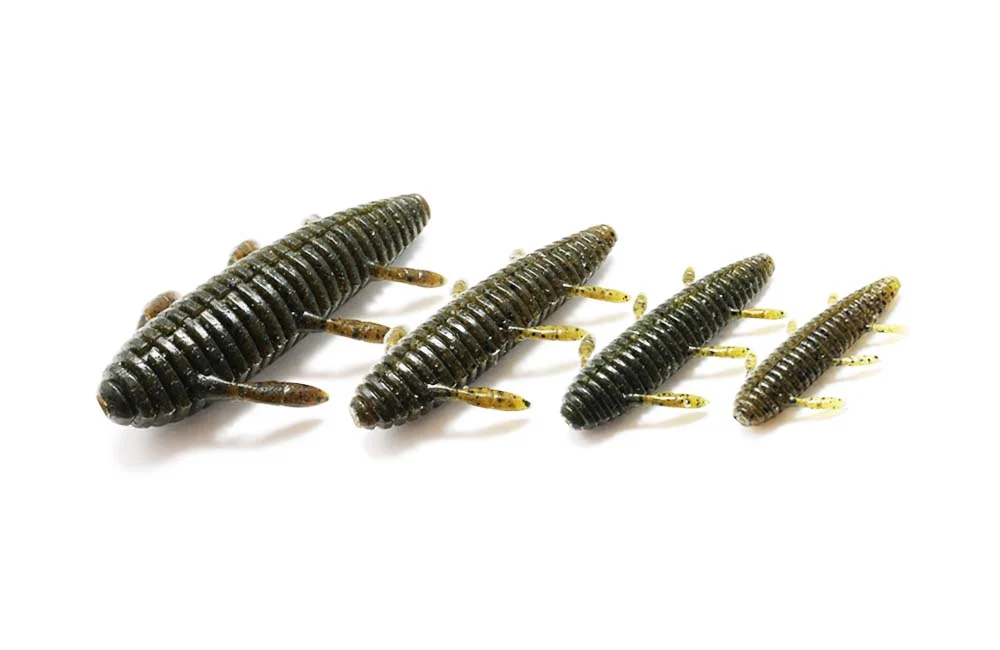
Backslide Rig
バックスライドリグ· Backsliding Rig, Back Slide Rig, Backslide· Intermediate
A soft-plastic rig designed to glide backward as it falls, allowing the lure to reach underneath overhanging cover and other difficult targets.
The Backslide Rig is a soft-plastic presentation designed to make the lure move backward—or away from the angler—as it falls.
Instead of dropping vertically or moving back toward the angler after the cast, the lure's balance causes it to glide farther underneath the target. This makes the technique particularly useful for reaching bass positioned beneath overhanging vegetation, trees, docks, and other cover.
Different soft plastics achieve the backslide in different ways. Some are designed specifically with an offset center of gravity or appendages that create the backward glide. Others can be rigged in reverse or modified with a nail sinker to shift the lure's center of gravity.
With the issei Shizumushi, for example, a nail sinker can be inserted into the thicker end of the body to change its balance and create a backsliding fall.
The cast is normally made close to the edge of the target. After the lure enters the water, the angler gives it enough slack line to glide naturally underneath the cover. Excessive line tension can restrict the backslide and pull the lure back toward the angler.
Many strikes occur during this uncontrolled fall, so anglers watch the line carefully before moving the lure again.
The technique is particularly valuable in Japanese shore fishing, where anglers often cannot position themselves directly above or behind productive cover and instead need the lure itself to travel into otherwise inaccessible areas.