BASSWORM 145
バスワーム145
A highly unconventional 145 mm soft plastic from IMAKATSU designed to imitate a juvenile bass rather than conventional forage. Its asymmetrical body slit creates a struggling action intended to resemble a small bass desperately trying to escape into cover.
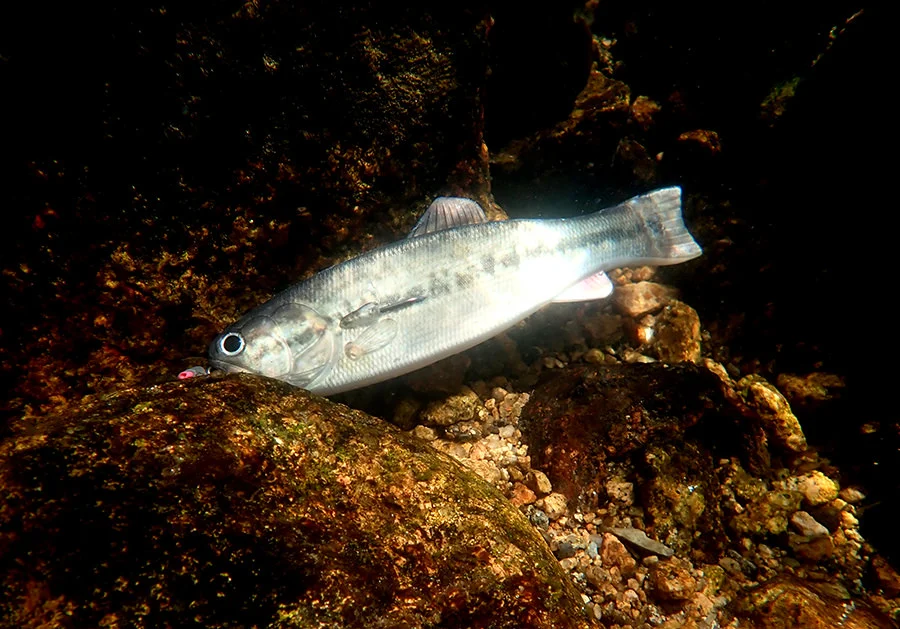
What is the BASSWORM 145?
The BASSWORM 145 is a 145 mm soft plastic from IMAKATSU built around an unusual concept: using a bass itself as the prey.
Rather than imitating a conventional baitfish, bluegill, crawfish, or worm, the lure is shaped to resemble a juvenile bass.
One of its most important design features is an asymmetrical slit placed on only one side of the body.
Combined with the semi-flat body and relatively firm material, this structure allows the lure to produce an unstable struggling movement when shaken around bottom structure.
IMAKATSU designed this action to resemble a frightened juvenile fish desperately trying to push its way into rocks, wood, or other cover to escape a predator.
The result is a soft plastic built around a specific predatory interaction rather than simply reproducing the appearance of common forage.
Why it's popular in Japan
The BASSWORM 145 represents the highly experimental side of modern Japanese bass fishing.
Bluegill-shaped soft plastics have become common, but IMAKATSU approached the idea from a different direction by asking why bass-shaped soft plastics were rarely used to target larger bass.
The lure was therefore developed around the possibility of bass preying on smaller members of their own species.
More importantly, the design does not rely only on realistic appearance.
Its asymmetrical slit and specialized rigging are intended to reproduce the behavior of a frightened juvenile fish attempting to escape into cover.
This combination of realistic prey profile, unusual movement, and highly specific presentation makes the BASSWORM 145 an interesting example of Japanese lure development based on observed predatory behavior rather than conventional lure categories.
How Japanese anglers fish it
One of the signature ways to fish the BASSWORM 145 is with a relatively heavy bottom-oriented rig.
IMAKATSU recommends approximately 10 to 17.5 g of weight with a free-style Texas-type setup or football head, combined with a large offset hook mounted sideways through the lure.
The heavy, low-positioned weight acts as a pivot point on the bottom.
Instead of moving the lure a long distance, the angler shakes it repeatedly in one location. Small, sharp rod-tip movements make the asymmetrical body struggle around the weight, creating the appearance of a frightened juvenile fish attempting to force its way into nearby cover.
The lure is considerably more versatile than this signature presentation.
IMAKATSU also recommends conventional Texas rigs, Neko-rig presentations, and weightless fishing.
When rigged weightless, the BASSWORM 145 can be retrieved straight through the water or worked aggressively near the surface with hard jerks to create a panicked baitfish action.
Recommended situations
- Trophy-class bass
- Bass feeding around cover
- Rocks and wood
- Bottom-oriented presentations
- One-spot shaking
- Heavy weighted rigs
- Texas Rig
- Neko Rig
- Weightless presentations
- Surface panic action
- Situations where conventional forage imitations are being ignored
- When juvenile bass are potential forage
How it differs from US-market lures
For US anglers, the most unusual aspect of the BASSWORM 145 is its choice of prey.
Instead of imitating shad, bluegill, crawfish, or other familiar forage, IMAKATSU deliberately designed the lure around a juvenile bass.
The concept goes beyond appearance.
An asymmetrical slit in the body is used to create an unstable struggling movement, while the signature heavy-weight presentation keeps the lure near one piece of cover and makes it appear as though the small fish is desperately attempting to escape.
This combination of a juvenile-bass profile, asymmetrical soft-plastic construction, and highly specialized presentation makes the BASSWORM 145 a particularly interesting example of JDM lure design.
It is less about creating another realistic swimbait and more about reproducing a specific moment of predator-and-prey behavior.
Video
Related lures

SOFT HANITAS 4
ソフトハニタス4
A 4-inch soft-bodied lure from Japanese brand MADOTACHI, featuring adjustable Qwing fins and an interchangeable internal IN system. Its flexible elastomer body and customizable components allow anglers to modify the lure's swimming characteristics for different conditions.

Last Ace F
ラストエースF
A floating elastomer soft bait from EVERGREEN designed to imitate a vulnerable baitfish at or near the surface. Available in 80, 95, and 110 mm sizes, Last Ace F supports subtle I-shaped retrieves, surface twitching, and nail-weighted hover strolling presentations.

Lucy
ルーシー
A 3.2-inch Japanese finesse worm designed to help anglers simply catch a bass. Developed by Lake Biwa guide Kenta Onishi, Lucy combines a slim profile with a responsive curly tail and is especially effective on a down shot rig.