issei G.C. Maji I-ji Rareshi 60F
G.C.マジI字「ラレシ」60F
A 60 mm floating I-shaped hard bait from issei designed for stable straight-line retrieves, exceptional casting distance for its 3 g weight, and a natural head-up rise when paused.

What is the issei G.C. Maji I-ji Rareshi 60F?
G.C. Maji Iji "Rareshi" 60F is a compact floating hard bait from issei developed specifically for I-shaped finesse presentations.
Despite weighing only 3 g, the lure combines a rear-volume body shape with an internal weight-transfer system to achieve unusually long casting distance for its size.
Its extremely small lip is not intended to create a conventional wobbling action. Instead, it stabilizes the lure's posture and provides enough resistance through the rod to help the angler maintain a controlled retrieve.
During the retrieve, Rareshi swims in a stable horizontal to slightly nose-down posture, creating a restrained baitfish presentation.
The lure also features a unique movable tinsel system designed to keep the tinsel aligned without interfering with the lure's action.
Why it's popular in Japan
Rareshi was designed around one of the key challenges of Japanese I-shaped fishing: making an extremely subtle presentation easy to control and practical to cast.
Very small I-shaped lures can be difficult to cast and may provide so little resistance that anglers struggle to feel what the lure is doing.
Rareshi addresses both problems through its weight-transfer system, rear-volume body shape, and extremely small stabilizing lip.
The result is an I-shaped bait that maintains a stable trajectory while giving the angler enough resistance to control the retrieve.
This makes the specialized I-shaped approach more accessible while retaining the subtle presentation needed for wary bass.
How Japanese anglers fish it
The fundamental presentation is a slow and steady I-shaped retrieve.
Cast Rareshi beyond the target area and retrieve it at a controlled speed while allowing the small lip to stabilize the lure. Excessive rod action is unnecessary because the goal is to maintain a restrained, natural baitfish trajectory.
Pauses provide a second important element of the presentation.
During the retrieve, the lure maintains a horizontal to slightly nose-down posture. When the retrieve is stopped, the internal weight shifts toward the rear and, together with the resistance of the tinsel, causes the lure to rise naturally in a head-up position.
Anglers can therefore alternate between a stable I-shaped retrieve and pauses that create a controlled change in posture and direction.
Recommended situations
- I-shaped finesse presentations
- Clear water
- Highly pressured bass
- Wakasagi and small baitfish patterns
- Surface and subsurface feeding
- Long casts with lightweight tackle
- Bass that reject aggressive lure action
- Reservoirs and lakes
- Slow steady retrieves
- Retrieve-and-pause presentations
How it differs from US-market lures
Rareshi represents a highly specialized Japanese approach to finesse hard-bait fishing.
Rather than using a lip to generate strong wobble or vibration, its tiny lip is designed primarily to stabilize the lure and provide subtle resistance during an almost actionless straight retrieve.
The lure also addresses two practical problems associated with very small I-shaped baits: limited casting distance and the lack of feedback during the retrieve.
Its weight-transfer system improves casting performance, while the small lip gives the angler enough resistance to maintain control without sacrificing the subtle presentation.
The head-up floating action during pauses adds another controlled change in posture without turning the lure into a conventional twitchbait or jerkbait.
For US anglers exploring JDM techniques, Rareshi is a clear example of how Japanese lure design can optimize an entire hard bait around the seemingly simple act of swimming almost perfectly straight.
Video
Related lures
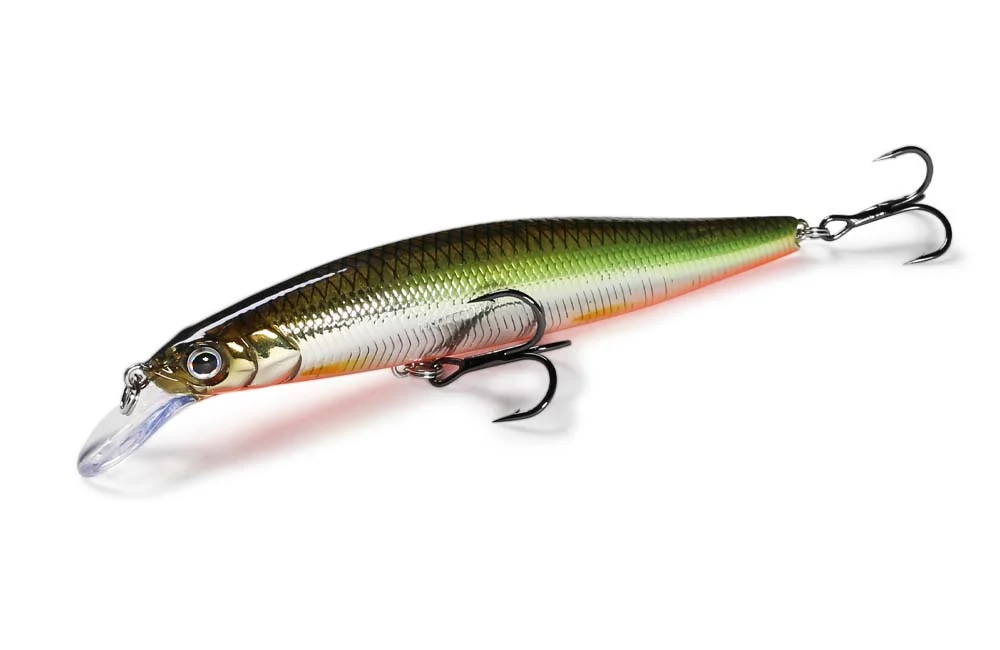
G.C. Minnow 89 SR-SP
G.C.ミノー 89 SR-SP
A shallow-running Japanese minnow from issei designed to draw bass upward and trigger reaction bites. The G.C. Minnow 89 SR-SP combines a tight wobble-and-roll action with flashing to attract fish from below.

G.C. Zari Vibe
G.C.ザリバイブ
A crawfish-inspired vibration bait from issei featuring powerful high-pitch action, a complex multi-material rattle system, and a shimmying fall. Designed for both horizontal retrieves and bottom-oriented presentations, the G.C. Zari Vibe brings a distinctly Japanese approach to the lipless vibration category.
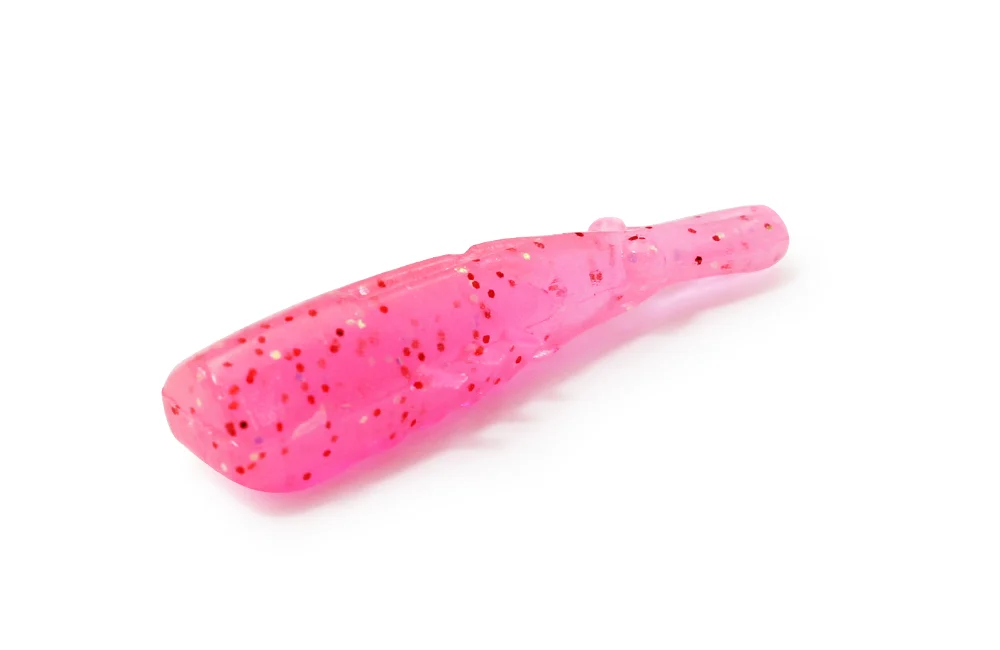
Hane Ebi 1.5
海太郎 ハネエビ 1.5
A compact 1.5-inch soft plastic from issei designed to produce sharp side-to-side darting action when paired with the Hane Ebi Head. Originally developed for Japanese light saltwater fishing, the Hane Ebi has also proven effective for bass through the reaction-oriented Micro Winding technique.