Hane Ebi 1.5
海太郎 ハネエビ 1.5
A compact 1.5-inch soft plastic from issei designed to produce sharp side-to-side darting action when paired with the Hane Ebi Head. Originally developed for Japanese light saltwater fishing, the Hane Ebi has also proven effective for bass through the reaction-oriented Micro Winding technique.
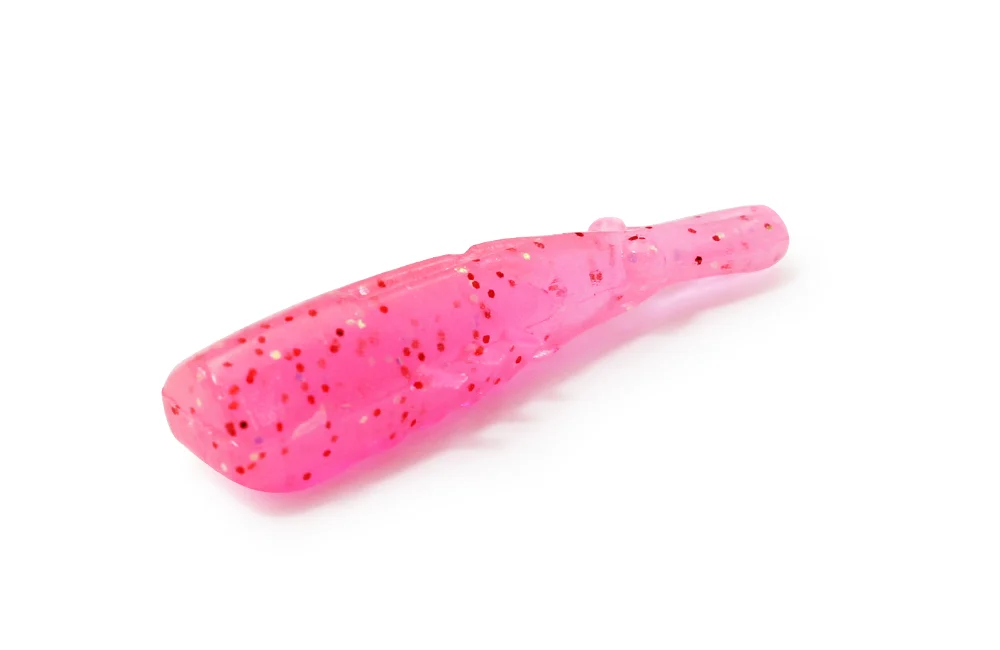
What is the Hane Ebi 1.5?
The Hane Ebi 1.5 is a compact soft plastic from issei's Umitaro saltwater lineup, designed specifically for sharp darting presentations.
Its short, relatively wide body is combined with a distinctive pin tail and three pairs of tiny appendages along the sides.
When paired with the dedicated Hane Ebi Head, short rod movements cause the lure to cut sharply from side to side. The small lateral appendages create additional subtle water movement during the presentation.
The soft plastic and jighead were designed as a system. Their connecting surfaces fit together to reduce unnecessary resistance and help the lure produce a clean dart.
The body also includes a guide hole and hook-exit slit to make accurate rigging easier.
Although the Hane Ebi was developed primarily for Japanese light saltwater fishing, the same compact profile and reaction-oriented darting action can also be used effectively for freshwater bass.
Why it's popular in Japan
The Hane Ebi is interesting because it represents a distinctly Japanese approach to creating reaction bites with very small lures.
Instead of relying on a conventional paddle tail or straight swimming action, the Hane Ebi system is designed to make a compact soft plastic suddenly change direction.
The dedicated triangular Hane Ebi Head makes it possible to produce this sharp side-to-side dart with relatively simple rod movements.
This makes the lure useful when anglers want the finesse profile of a very small bait while still presenting it aggressively enough to trigger a reaction.
Although the system was developed for Japanese light saltwater fishing, anglers have also adapted the same Micro Winding presentation to bass fishing.
That crossover between saltwater light-game tackle and freshwater bass fishing makes the Hane Ebi particularly interesting as an example of Japanese lure experimentation.
How Japanese anglers fish it
The Hane Ebi 1.5 is most characteristically paired with the dedicated Hane Ebi Head.
The current heavy-wire gold-hook version of the head is available in 2 g, 3 g, and 5 g sizes with a #8 hook.
After casting, anglers allow the lure to reach the desired depth and then use short rod movements to make it dart sharply from side to side.
A common rhythm is one or two jerks followed by a pause.
The pause allows the lure to fall before the next sudden directional movement, creating a repeated sequence of escape and hesitation.
Jighead weight can be changed according to depth, casting distance, and the desired fall speed.
For bass, issei has documented anglers using the 1.5-inch Hane Ebi with a 3 g Hane Ebi Head in Japanese ponds, including a presentation using repeated jerks and pauses near the bottom.
Recommended situations
- Micro Winding / Micro Darting
- Reaction-bite fishing
- Pressured bass
- Small forage situations
- Clear to lightly stained water
- Spinning tackle
- Light-line fishing
- Suspended bass
- Bottom-oriented bass
- One-jerk or two-jerk-and-pause retrieves
- When conventional finesse presentations are being ignored
- When a small lure needs a more aggressive action
How it differs from US-market lures
For US bass anglers, the Hane Ebi is unusual not simply because of its small size, but because it comes from a Japanese light saltwater fishing system that can be adapted to bass.
The lure and its dedicated Hane Ebi Head are designed together to create sharp side-to-side movement rather than a conventional swimming action.
This allows anglers to combine a very small finesse-sized profile with an aggressive reaction presentation.
The technique known in Japan as Micro Winding uses short rod movements and pauses to repeatedly make the lure dart and fall.
Rather than representing a completely new type of soft plastic, the Hane Ebi demonstrates how Japanese anglers sometimes transfer specialized tackle and techniques between saltwater and freshwater fishing.
For US anglers interested in JDM tackle, that crossover can be just as interesting as the lure itself.
Video
Related lures
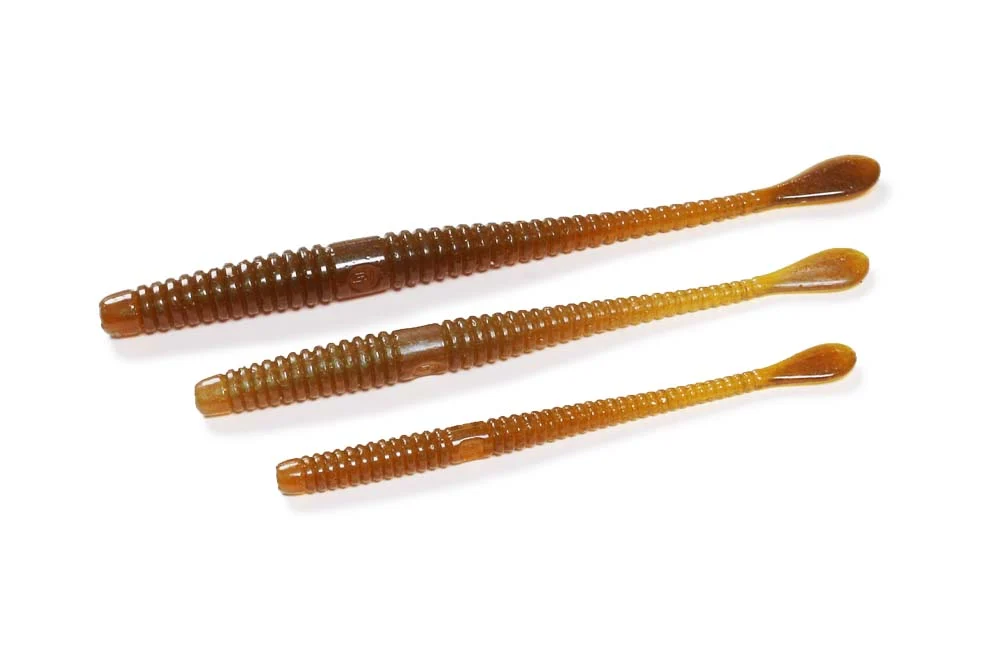
Spatula
スパテラ
A classic Japanese finesse worm from issei featuring a small asymmetrical paddle tail. The Spatula combines a ribbed straight-worm body with subtle tail vibration, allowing it to swim, twitch, and respond to light rod movements without producing excessive action.

AK PUNCH
AKパンチ
A high-vibration Japanese soft plastic from issei built around a bulky tail that pulses vertically with strong water displacement. The AK PUNCH can be fished weightless or on several bottom-oriented rigs, and is especially useful for generating powerful action deep inside grass and cover.
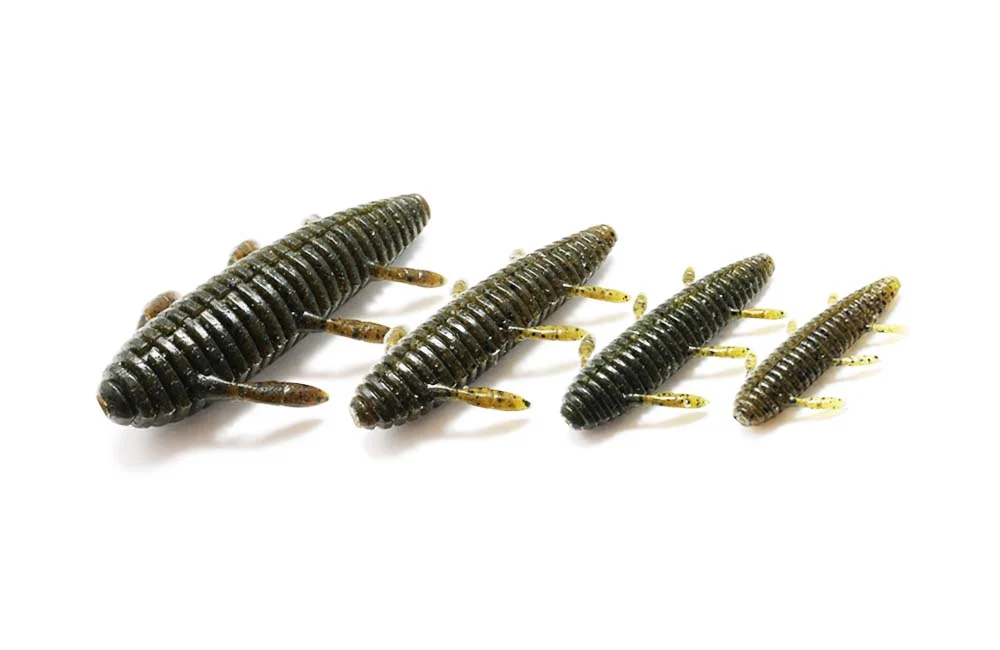
Shizumushi
沈み蟲
A high-density Japanese soft plastic from issei designed for long casting and a subtle falling action. The Shizumushi can be fished weightless for a near-horizontal fall or rigged with a nail weight for a backsliding presentation into cover.