DEATHADDER
デスアダー
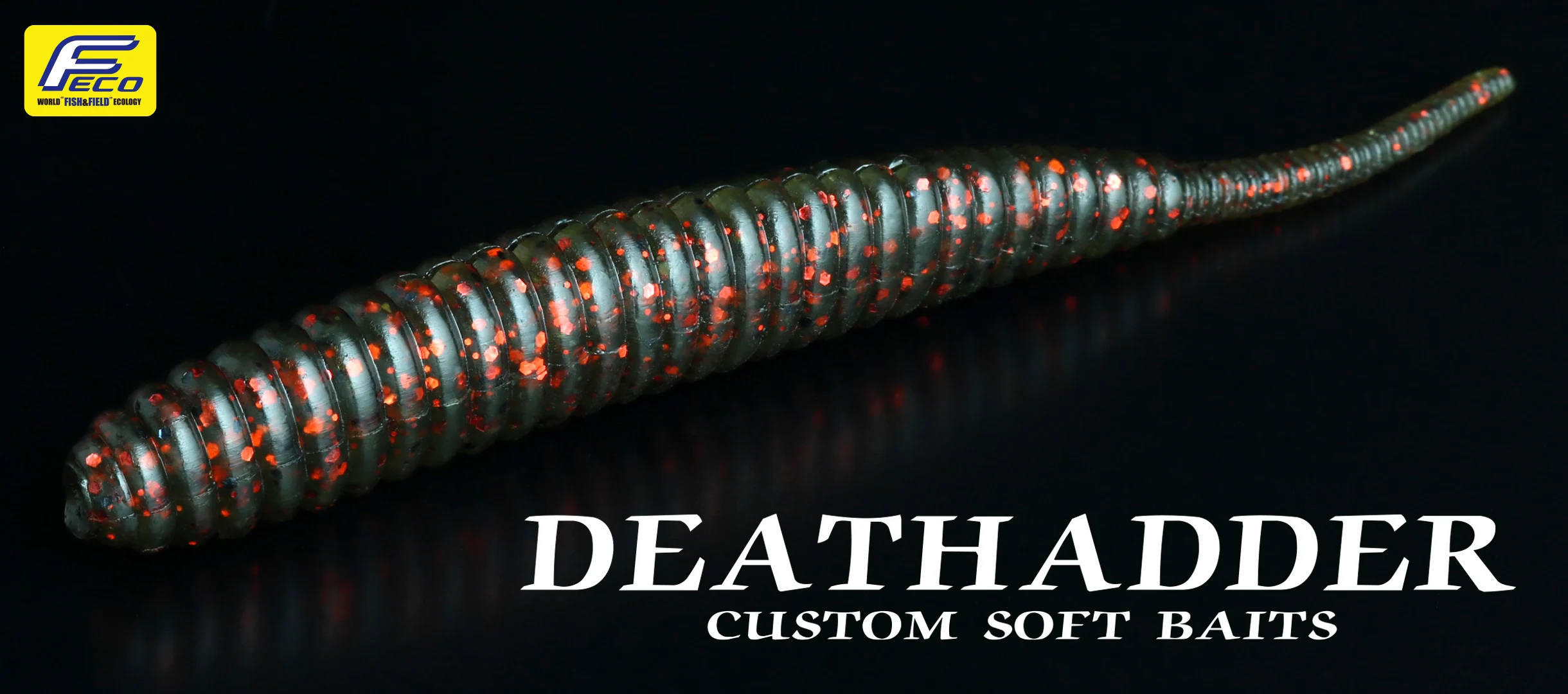
A long-running Japanese soft plastic from deps, first released in 2001. The DEATHADDER combines a wide baitfish-shaped body with a sharply tapered pin tail, producing subtle vibration and natural movement across an unusually wide range of rigs.
What is the DEATHADDER?
The DEATHADDER is one of the signature soft plastics from Japanese bass fishing brand deps.
First released in 2001, it uses a wide baitfish-inspired body with surface contours that interact with the surrounding water and a tail that narrows dramatically toward the rear.
This thin pin tail produces a tight, subtle vibration rather than the strong kicking action of a conventional paddle-tail swimbait.
The standard material contains approximately 25% salt and is extremely soft, giving the lure enough weight for effective weightless casting while also producing a natural falling action.
One of the defining characteristics of the DEATHADDER is its versatility.
It can be fished weightless, on a jighead, Texas rig, Wacky rig, drop shot, or as a trailer for jigs and spinnerbaits. Changing the hook orientation can also significantly alter its action.
The result is a soft plastic that does not belong to one specialized technique, but instead acts as a highly adaptable baitfish-profile platform.
Why it's popular in Japan
The DEATHADDER has remained part of Japanese bass fishing for more than two decades because its simple appearance hides an unusually wide range of possible presentations.
Unlike highly specialized soft plastics designed around one specific rig, the DEATHADDER can be adapted to different depths, cover types, and fish activity levels simply by changing the rig or hook orientation.
Its wide body creates water resistance and presence, while the sharply tapered pin tail responds to subtle water movement with a tight vibration.
The standard high-salt material also gives the lure useful casting distance and a natural fall when fished without additional weight.
Over time, Japanese anglers have applied the DEATHADDER to everything from weightless fishing and bottom presentations to jighead swimming and trailer applications.
Its longevity is particularly notable: the original DEATHADDER was released in 2001 and remains in the current deps lineup today.
How Japanese anglers fish it
One of the simplest ways to fish the DEATHADDER is weightless with an offset hook.
Hook orientation has a noticeable effect on the lure's behavior.
When rigged horizontally, the wide body catches more water and produces a very slow fall combined with sharp darting movement when twitched.
When rigged vertically, the lure produces a wobbling fall. The same orientation can also create a subtle baitfish-like swimming action when the DEATHADDER is used on a jighead or as a trailer.
The lure can also be fished on Texas rigs, Wacky rigs, drop-shot rigs, rubber jigs, and spinnerbaits.
More recent NONSALT versions of the 4-, 5-, and 6-inch models are particularly suited to mid-strolling. Their lower-density material shifts the center of gravity toward the jighead and helps maintain a horizontal swimming posture while producing a rolling action.
This ability to change behavior through rigging, hook orientation, and material selection is a major part of the DEATHADDER's versatility.
Recommended situations
- Weightless fishing
- Mid Strolling
- Baitfish-oriented situations
- Pressured bass
- Slow falling presentations
- Twitch-and-fall presentations
- Jighead swimming
- Texas rigs
- Drop-shot rigs
- Wacky rigs
- Jig and spinnerbait trailers
- Vegetation and cover
- When a subtle tail action is preferred over a strong paddle-tail kick
How it differs from US-market lures
For US anglers, the DEATHADDER may initially look like a relatively simple baitfish-shaped soft plastic, but much of its character comes from how its body responds to different rigging methods.
Instead of using a paddle tail to generate obvious swimming action, the lure transitions from a wide body into a very thin pin tail that produces subtle vibration from small changes in water flow.
The body can also behave differently depending on hook orientation. Horizontal and vertical rigging create different falling and swimming actions, allowing anglers to tune the same soft plastic without changing lure models.
Its long history in Japanese bass fishing also makes the DEATHADDER significant beyond any single technique.
Rather than representing one specialized JDM rig, it demonstrates how Japanese anglers can take a relatively simple soft-plastic design and extract very different presentations through rigging, orientation, material, and precise lure control.
Video
Related lures
SAKAMATA SHAD
サカマタシャッド
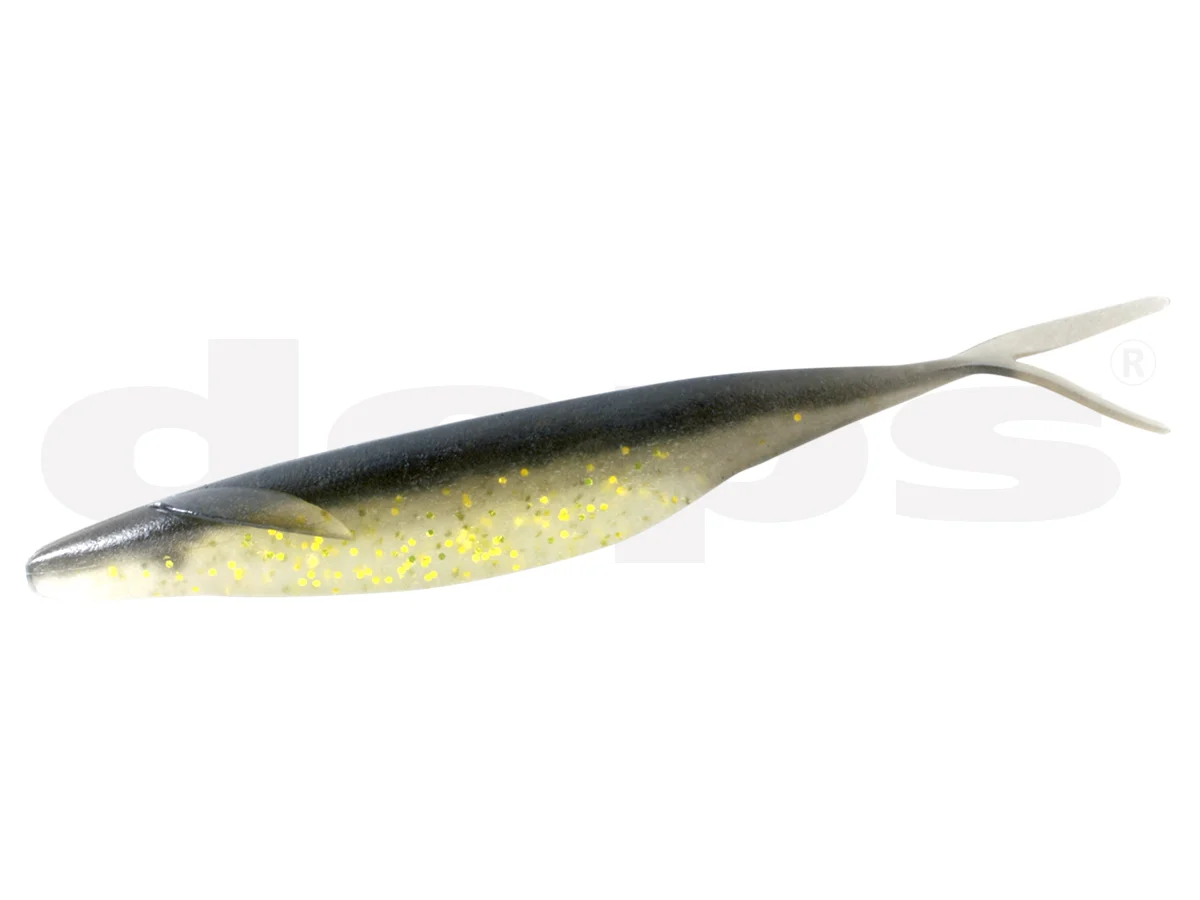
A signature soft-plastic baitfish lure from deps known for its explosive darting action. The SAKAMATA SHAD uses side-mounted keels and a low-resistance body to create wide, unpredictable jumps and slides, making it especially effective for weightless jerking and mid-strolling.
Slide Swimmer 115
スライドスイマー 115
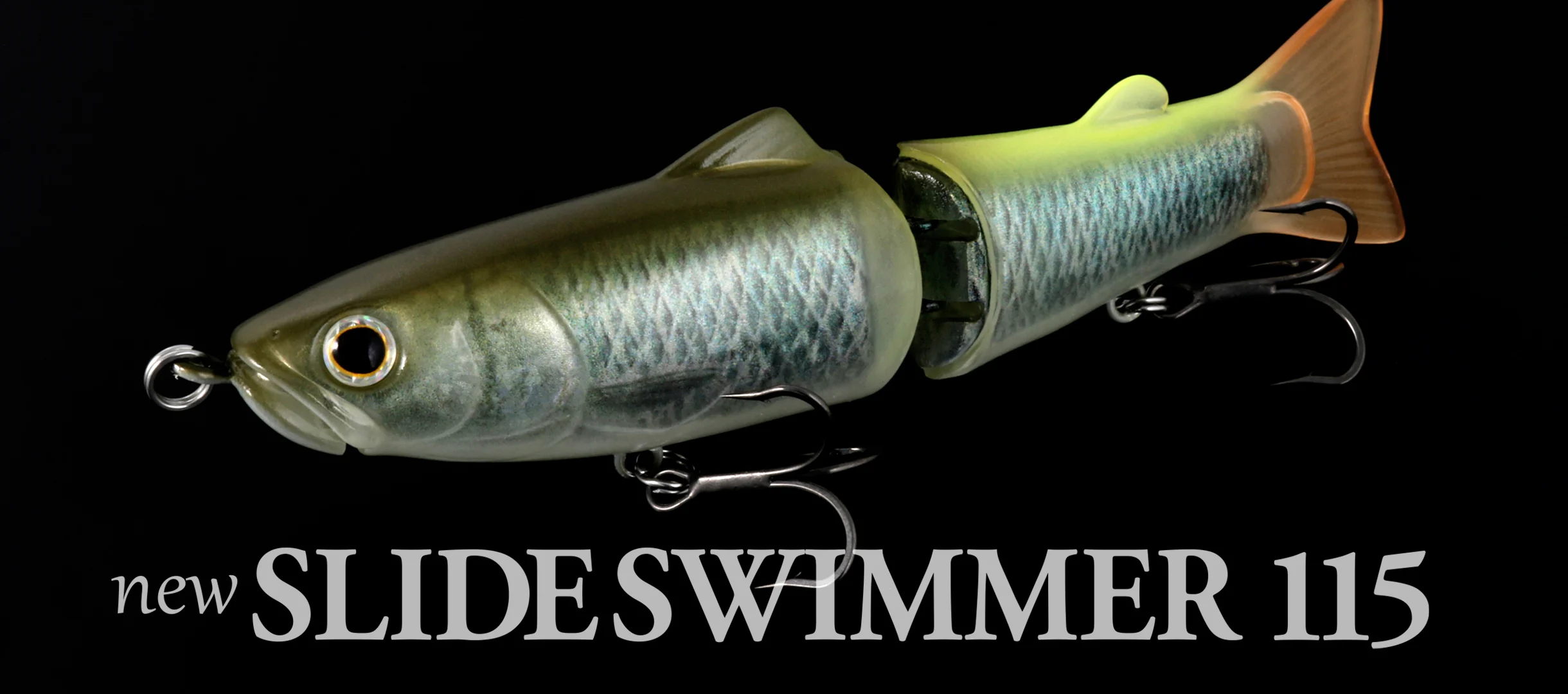
The compact member of the deps Slide Swimmer glide-bait family: about 115 mm and 3/4 oz, single-jointed, with a wide S-glide and an internal knocker.

SOFT HANITAS 4
ソフトハニタス4
A 4-inch soft-bodied lure from Japanese brand MADOTACHI, featuring adjustable Qwing fins and an interchangeable internal IN system. Its flexible elastomer body and customizable components allow anglers to modify the lure's swimming characteristics for different conditions.