Mid Strolling
ミドスト· Middle strolling, midsuto· Intermediate
Mid strolling is a Japanese finesse technique in which a soft swimbait or minnow on a light jig head is swum through the middle of the water column while the rod tip is shaken continuously to make the bait roll and flash.

What it is
"Mid strolling" is an English rendering of the Japanese contraction midosuto (ミドスト), short for "middle strolling." It is a finesse technique built around swimming a soft swimbait or minnow on a jig head through the middle of the water column rather than along the bottom.
As the bait is retrieved, the angler applies a light, continuous shake with the rod tip. The goal is not to make the lure dart aggressively, but to make the body roll from side to side and repeatedly expose its flank. This creates a subtle combination of movement and flash while the lure continues to travel horizontally through the target depth.
Light jig heads are common, but there is no single "mid strolling weight." Around 1.3 to 3.5 g (roughly 1/20 to 1/8 oz) is useful for many finesse situations, while heavier heads can be used with larger baits, deeper water, wind, or when a faster fall is needed.
Why it's used in Japan
Mid strolling became associated with Japanese bass fishing as a way to target suspended or reluctant fish with a controlled, natural-looking presentation.
Rather than relying on a hard vibration, sharp jerk, or bottom contact, the technique lets an angler keep a bait at a chosen depth while producing a continuous rolling action. That makes it especially useful when bass are feeding on baitfish in open water or are unwilling to chase more aggressive presentations.
The technique is closely associated with Japanese soft-plastic design as well. Many JDM minnows and shad-style baits are designed to roll easily on a jig head, making their body shape, balance, and material part of the presentation rather than simply serving as a trailer.
How to fish it
Start by rigging a soft swimbait, shad, or minnow-style bait on a jig head. A bait around 3 to 4.5 inches is a practical starting point, although both smaller and larger combinations can be used.
Cast beyond the area you want to fish and let the lure sink to the target depth. Counting the bait down after it hits the water is a simple way to repeat the same approximate depth on later casts.
Begin a slow, steady retrieve while applying small, continuous shakes with the rod tip. The shake should make the bait roll rather than jump forward. At the same time, avoid pulling the line completely tight. A slight amount of slack or bow in the line helps separate the rod-tip movement from the lure's forward travel, allowing the bait to roll while advancing slowly through the water.
The basic sequence is:
- Cast beyond the target.
- Count the jig head down to the desired depth.
- Begin a slow, steady retrieve.
- Keep a slight amount of slack in the line.
- Shake the rod tip with small, continuous movements.
- Maintain the lure's depth while watching for a consistent rolling action.
The exact retrieve speed, jig-head weight, and amount of rod movement depend on depth, wind, current, bait size, and how actively the bass are feeding.
Mid strolling vs. hover strolling and the Damiki rig
Mid strolling, hover strolling, and the Damiki rig can all target suspended bass, but they are not the same presentation.
Mid strolling is primarily a horizontal swimming technique. The lure travels through the water column while the angler uses rod movement to create a continuous rolling action.
Hover strolling is generally a slower, more suspended presentation designed to keep a lightly weighted bait hovering and moving subtly around a specific depth or target. It emphasizes minimal forward movement more than traditional mid strolling.
A Damiki rig is typically presented more vertically to fish positioned beneath the boat, although modern forward-facing sonar has blurred some of the boundaries between these techniques.
The easiest way to think about the difference is the direction and movement of the presentation: mid strolling swims through the target zone, hover strolling tries to linger in it, and a traditional Damiki rig approaches suspended fish more vertically.
Tackle setup
Spinning tackle is the standard choice because it handles light jig heads, small soft plastics, and light line well.
A medium-light or light spinning rod around 6'6" to 7' is a practical starting point. The rod should have enough tip response to maintain a fine shake without moving the lure too aggressively.
A 2000- to 2500-size spinning reel works well with either light fluorocarbon or braided line with a fluorocarbon leader. Around 3 to 5 lb fluorocarbon is a useful finesse range, while braid can make it easier to feel the lure and control the presentation at distance.
The ideal setup depends on lure size and jig-head weight, so heavier mid-strolling combinations may call for stronger line and a more powerful rod.
JDM lures for mid strolling
One advantage of mid strolling is the variety of Japanese soft plastics designed around rolling, baitfish-like presentations.
Examples found in JDM bass fishing include:
- Fish Arrow Flash-J — a realistic baitfish imitation that works naturally on a jig head and is closely associated with Japanese mid-strolling presentations.
- RAID JAPAN Fish Roller — a minnow-shaped soft bait designed to produce a rolling action and natural baitfish profile.
- RAID JAPAN Super Fish Roller — a larger Fish Roller option for presenting a stronger silhouette while retaining the rolling concept.
- deps SAKAMATA SHAD — a soft jerkbait that can be adapted to mid-strolling presentations, particularly when a larger baitfish profile is wanted.
- deps DEATHADDER — a long-running Japanese soft plastic available in sizes that can be paired with jig heads for rolling mid-water presentations.
These baits do not all behave identically. Body shape, material, salt content, jig-head placement, and hook position can all affect how easily a lure rolls, so the best choice depends on the depth and action you want.
Common mistakes
Keeping the line too tight
Pulling directly against the jig head can make the lure track straight instead of rolling naturally. A small amount of line slack gives the rod shake room to work without constantly pulling the bait forward.
Shaking too aggressively
Mid strolling is not a hard jerking technique. Large rod movements can make the bait dart or rise instead of maintaining a controlled rolling action.
Retrieving too quickly
The lure needs enough time to remain in the target depth and show its side-to-side roll. If it quickly climbs toward the surface, slow the retrieve or adjust the jig-head weight.
Focusing only on the bottom
The technique is designed around the middle of the water column. Counting the lure down and repeating productive depths is often more important than maintaining bottom contact.
Treating one jig-head weight as standard
Mid strolling covers different bait sizes, depths, and conditions. Start light when appropriate, but choose the jig-head weight that lets you reach and maintain the depth where the fish are holding.
Lures for Mid Strolling
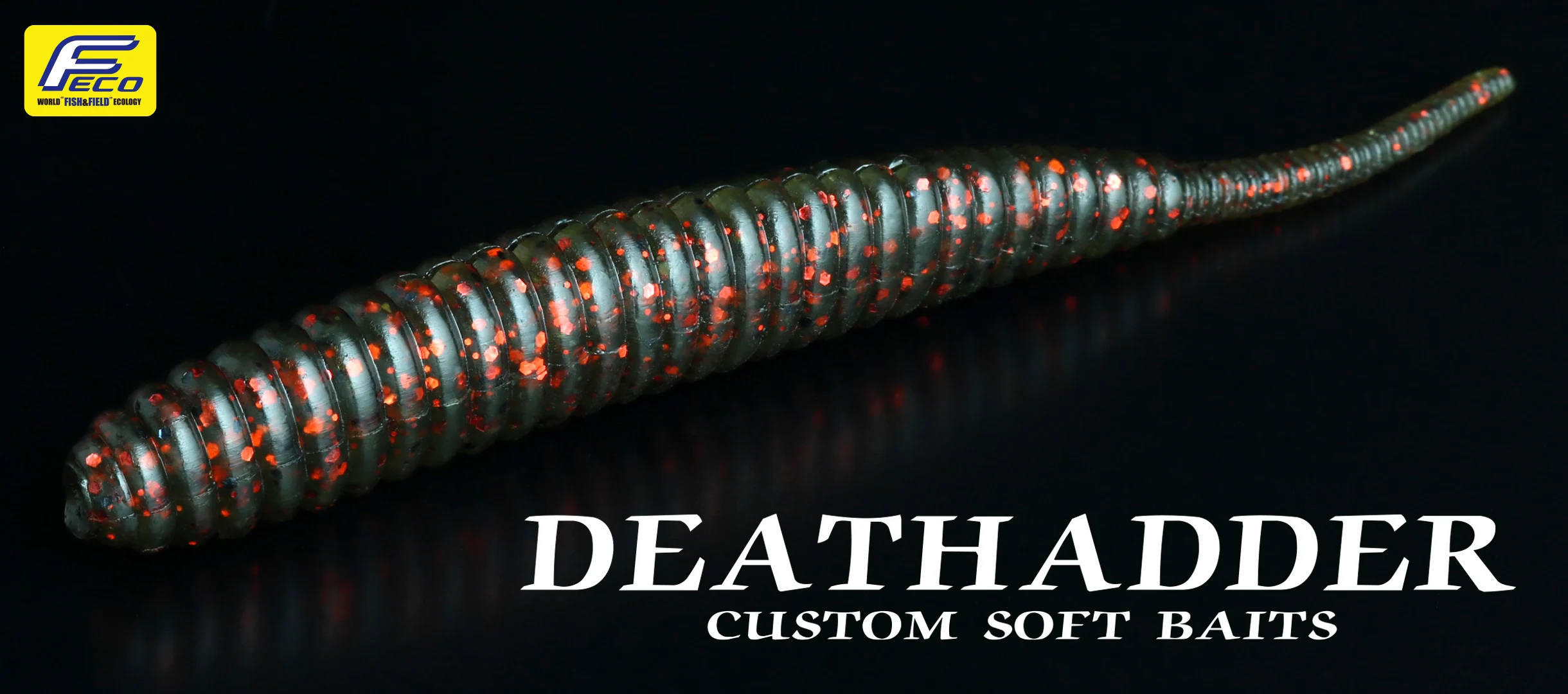
DEATHADDER
デスアダー
A long-running Japanese soft plastic from deps, first released in 2001. The DEATHADDER combines a wide baitfish-shaped body with a sharply tapered pin tail, producing subtle vibration and natural movement across an unusually wide range of rigs.

Fish Roller
フィッシュローラー
A Japanese soft-plastic baitfish imitation from RAID JAPAN designed for mid-strolling and hover-strolling. The FISH ROLLER uses a subtle rolling action and controlled forward movement to target suspended and heavily pressured bass.
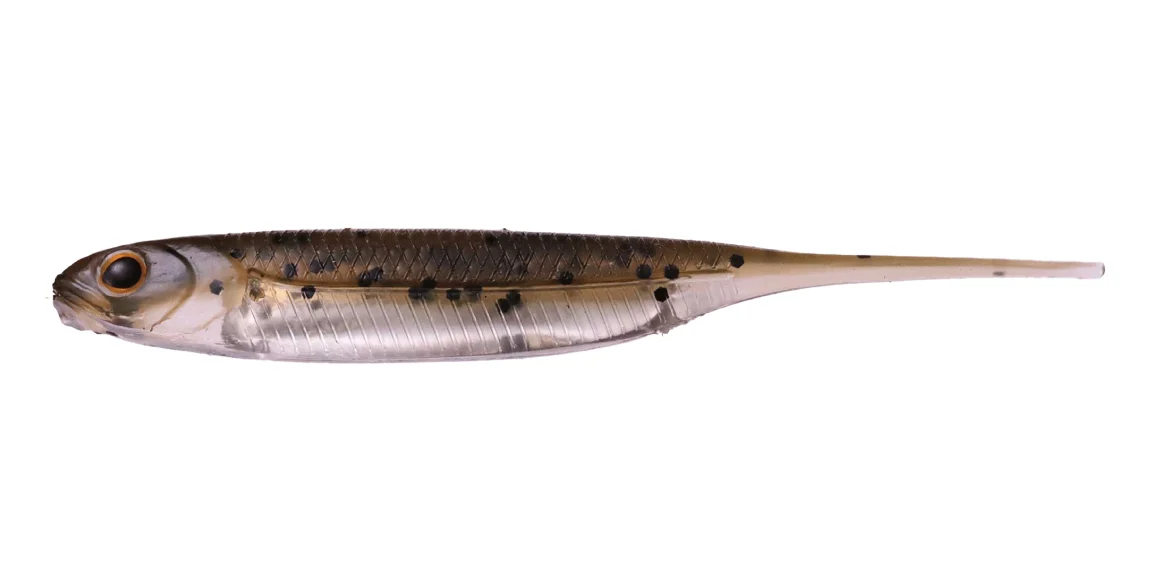
Flash-J 3"
フラッシュJ 3インチ
A slim baitfish soft bait with an internal aluminium foil plate for flash, built for mid strolling and other swimming finesse presentations.

Last Ace F
ラストエースF
A floating elastomer soft bait from EVERGREEN designed to imitate a vulnerable baitfish at or near the surface. Available in 80, 95, and 110 mm sizes, Last Ace F supports subtle I-shaped retrieves, surface twitching, and nail-weighted hover strolling presentations.
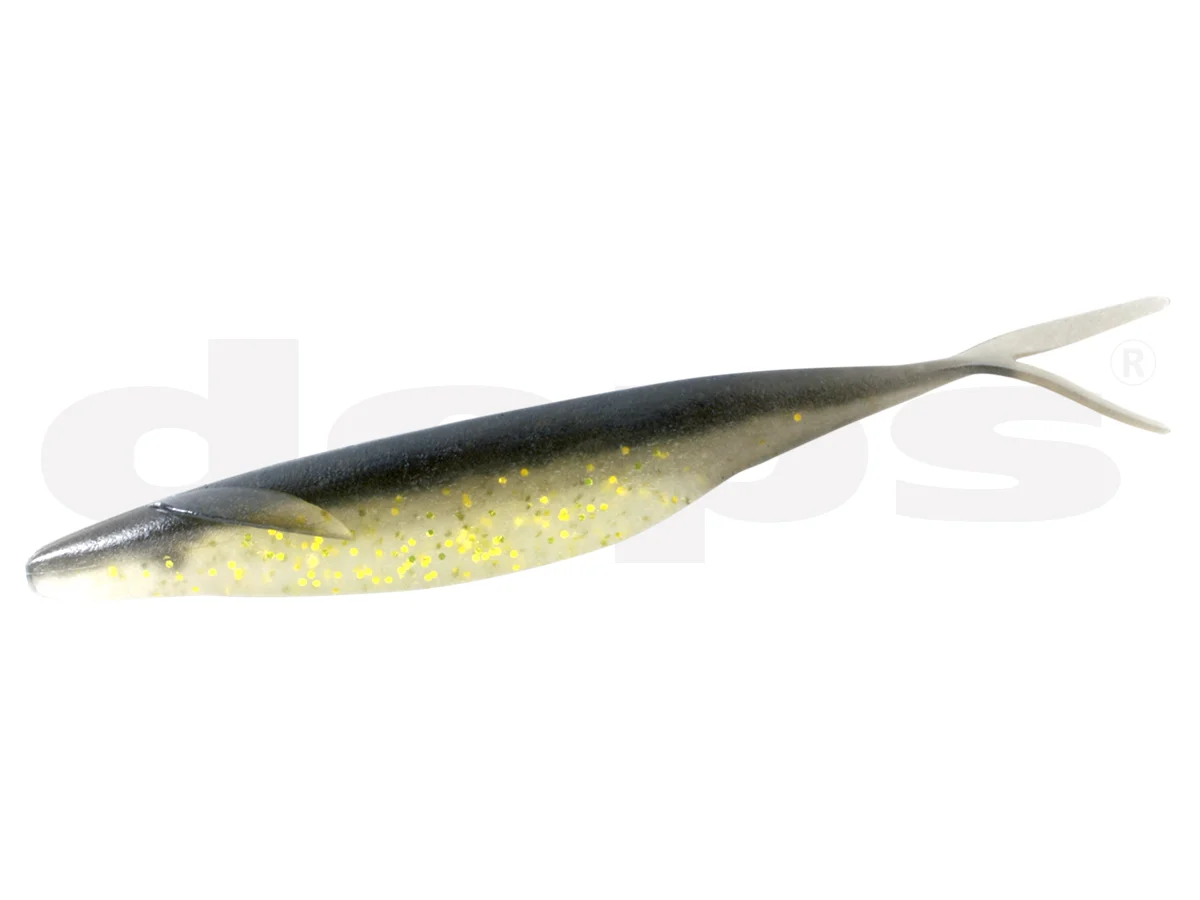
SAKAMATA SHAD
サカマタシャッド
A signature soft-plastic baitfish lure from deps known for its explosive darting action. The SAKAMATA SHAD uses side-mounted keels and a low-resistance body to create wide, unpredictable jumps and slides, making it especially effective for weightless jerking and mid-strolling.
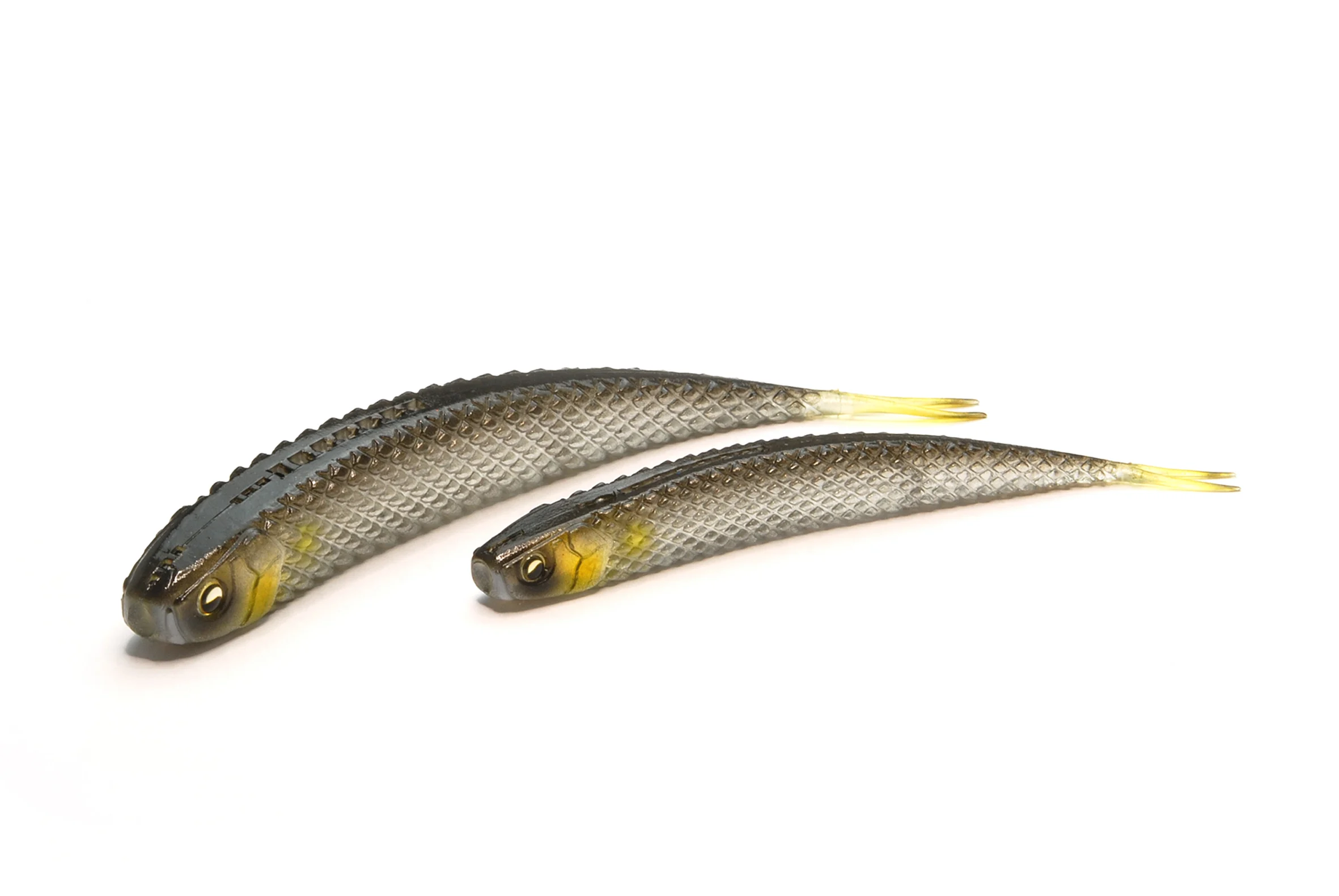
Super Fish Roller
スーパーフィッシュローラー
A Japanese soft-plastic baitfish imitation from RAID JAPAN designed around mid-strolling and hover-strolling techniques. Its soft body, three-dimensional scale pattern, and controlled rolling action allow anglers to keep the lure moving slowly while maintaining a natural baitfish presence.