TN60
TN60 / ティーエヌ60
The original 60 mm model at the heart of JACKALL's long-running TN VIBRATION series. The TN60 uses JACKALL's external tungsten O.M.S. weight system to create a low center of gravity, stable action across a wide range of retrieve speeds, and excellent bottom contact.

What is the TN60?
The TN60 is a 60 mm sinking vibration lure and the original core size of JACKALL's TN VIBRATION series.
Its defining feature is JACKALL's O.M.S. (Out Metal System), which positions a high-density tungsten weight externally at the mouth of the lure.
Moving part of the weight outside the body creates a low center of gravity while preserving internal body volume. The result is a compact 60 mm lure with the presence and fishing feel of a larger vibration bait.
The low center of gravity also contributes to stable casting and swimming performance across a wide range of retrieve speeds.
The original TN60 uses tungsten and brass balls internally to produce an audible rattling sound, distinguishing it from the Silent and Full Tungsten versions that are also available within the TN family.
Why it's popular in Japan
The TN60 has become one of the defining models of JACKALL's TN VIBRATION series because of its versatility.
JACKALL describes the 60 mm model as an all-rounder that can be used from shore or boat and across environments ranging from small ponds and reservoirs to large natural lakes.
A major part of that versatility comes from the O.M.S. design.
The external tungsten weight lowers the lure's center of gravity, helping it maintain a stable swimming posture while also improving its ability to detect contact with the bottom.
The lure is designed to remain upright rather than easily falling onto its side when it reaches the bottom, helping anglers maintain control when fishing close to bottom structure.
Combined with its compact profile, vibration, and rattling sound, these characteristics allow the TN60 to cover water horizontally or target bass vertically with lift-and-fall presentations.
How Japanese anglers fish it
The TN60 can be fished with a simple steady retrieve or with a lift-and-fall presentation.
For a steady retrieve, anglers cast the lure, allow it to reach the desired depth, and retrieve it while using its vibration to search for active fish.
Its stable action allows the retrieve speed to be changed considerably, from slow presentations to faster reaction-oriented retrieves.
During colder periods, the TN60 can also be worked close to the bottom.
The angler allows the lure to sink, lifts it until the lure begins vibrating strongly, and then lets it fall again. Repeating this movement allows the lure to stay around bottom-oriented bass while alternating between strong vibration and falling action.
The O.M.S. system also helps the lure maintain a stable posture when contacting the bottom, making bottom-oriented fishing an important part of the TN series' versatility.
Recommended situations
- Steady retrieves
- Lift-and-fall presentations
- Cold-water fishing
- Bottom-oriented bass
- Searching large areas
- Reaction fishing
- Ponds and reservoirs
- Large natural lakes
- Shore fishing
- Boat fishing
- Situations where both vibration and sound can help locate fish
How it differs from US-market lures
The TN60 belongs to the same broad category as the lipless crankbaits familiar to American bass anglers, but its O.M.S. construction gives it a distinctive design approach.
Instead of keeping all of the lure's weight inside the body, JACKALL positions a high-density tungsten weight externally at the mouth.
This creates a particularly low center of gravity and helps the lure maintain a stable swimming and bottom-contact posture.
The result is a lipless vibration bait designed not only for conventional horizontal retrieves but also for controlled bottom fishing and lift-and-fall presentations.
For US anglers, the TN60 is a useful example of how Japanese lure designers have refined the familiar lipless crankbait concept around balance, response, bottom contact, and versatility across different retrieve speeds.
Video
Related lures

SPEED VIB
スピードバイブ
A compact 42 mm solid-body vibration lure from JACKALL that combines the fast response and strong vibration of a metal blade bait with a more natural falling action. Available in 3.5 g, 5 g, and 7 g versions, the SPEED VIB is designed to trigger reaction bites through a sharp contrast between lift and fall.
DERACOUP
デラクー
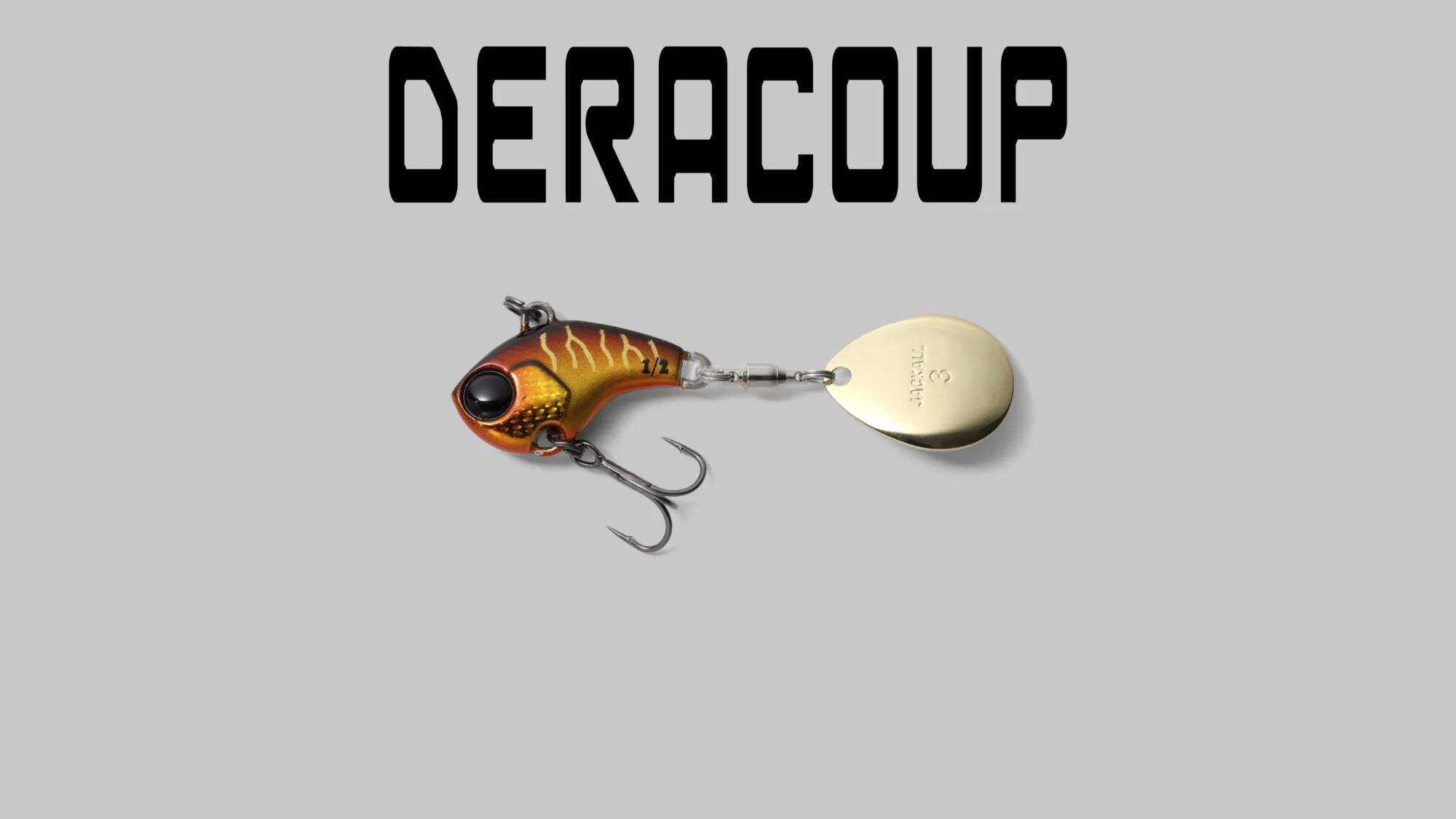
A compact spin-tail metal jig from JACKALL designed to combine exceptional casting distance with a bite-sized profile. The DERACOUP can be fished with a simple steady retrieve or lift-and-fall presentation, using its rotating blade to produce vibration and flash throughout the water column.

SOUL SHAD 58SP
ソウルシャッド 58SP
The original 58 mm model of JACKALL's SOUL SHAD series, designed for responsive steady retrieves and reaction bites. Its compact suspending body, magnetic weight-transfer system, and approximately 1.5 m running depth make it a versatile Japanese shad for covering water even under difficult conditions.